

Stay in the loop! Subscribe to our mailing list
On 9 December 2025, more than 140 participants, both in Brussels and online, gathered for the final conference of the HIBLend project, marking an important milestone for Student Blended Mobility in European Higher Education. Bringing together higher education institutions, policymakers, quality assurance bodies, student representatives and project partners, the event provided a space to reflect on the current state of blended mobility and on how its quality can be ensured in the long term.
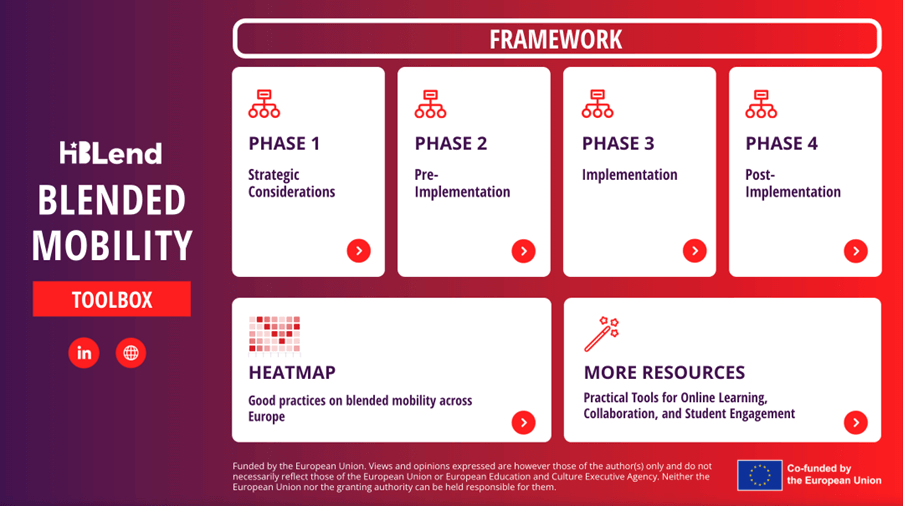
A highlight of the conference was the official launch of the HIBLend framework model on quality blended mobility, alongside the project’s digital toolbox. The framework offers practical guidance to support higher education institutions in the design, implementation and evaluation of high-quality blended mobility. It addresses key institutional, pedagogical and strategic dimensions and is aligned with the European Standards and Guidelines for Quality Assurance. The accompanying digital toolbox brings together the framework, a heatmap of good practices from across Europe, and a range of practical resources to help institutions translate quality principles into everyday practice and strategic decision-making.
Throughout the conference, discussions underlined why quality in student blended mobility matters. Speakers agreed that blended mobility has moved beyond a purely experimental phase and is increasingly becoming an established component of Erasmus+ and many institutional internationalisation strategies. Ensuring quality was framed not as an extra administrative step, but as a shared methodology that helps connect online and physical components, provides adequate student support, and ensures meaningful learning outcomes. Panellists stressed the importance of organisational capacity, digital solutions and pedagogical development to make blended mobility inclusive, coherent and sustainable. At the same time, concrete institutional experiences illustrated how quality principles can be put into practice, demonstrating how tailored institutional approaches and robust support structures can enhance the educational value of blended mobility.
Looking ahead, the closing session focused on blended mobility as a strategic instrument. Speakers highlighted its potential to widen participation, respond to diverse student needs and strengthen cooperation within alliances and networks. Participants also acknowledged persistent challenges, including limited resources, staff engagement and reliance on individual champions, and stressed the need for coordinated approaches at both institutional and alliance level to ensure long-term impact.
With the HIBLend framework and digital toolbox, the project leaves behind concrete, sector-validated resources to support quality in student blended mobility. As the project concludes, practitioners are invited to continue exchanging on the topic via the Blended Mobility LinkedIn Group and to join two upcoming webinars on 19 January 2026 and 4 February 2026, offering guidance on the practical use of the framework and toolbox.