
Stay in the loop! Subscribe to our mailing list
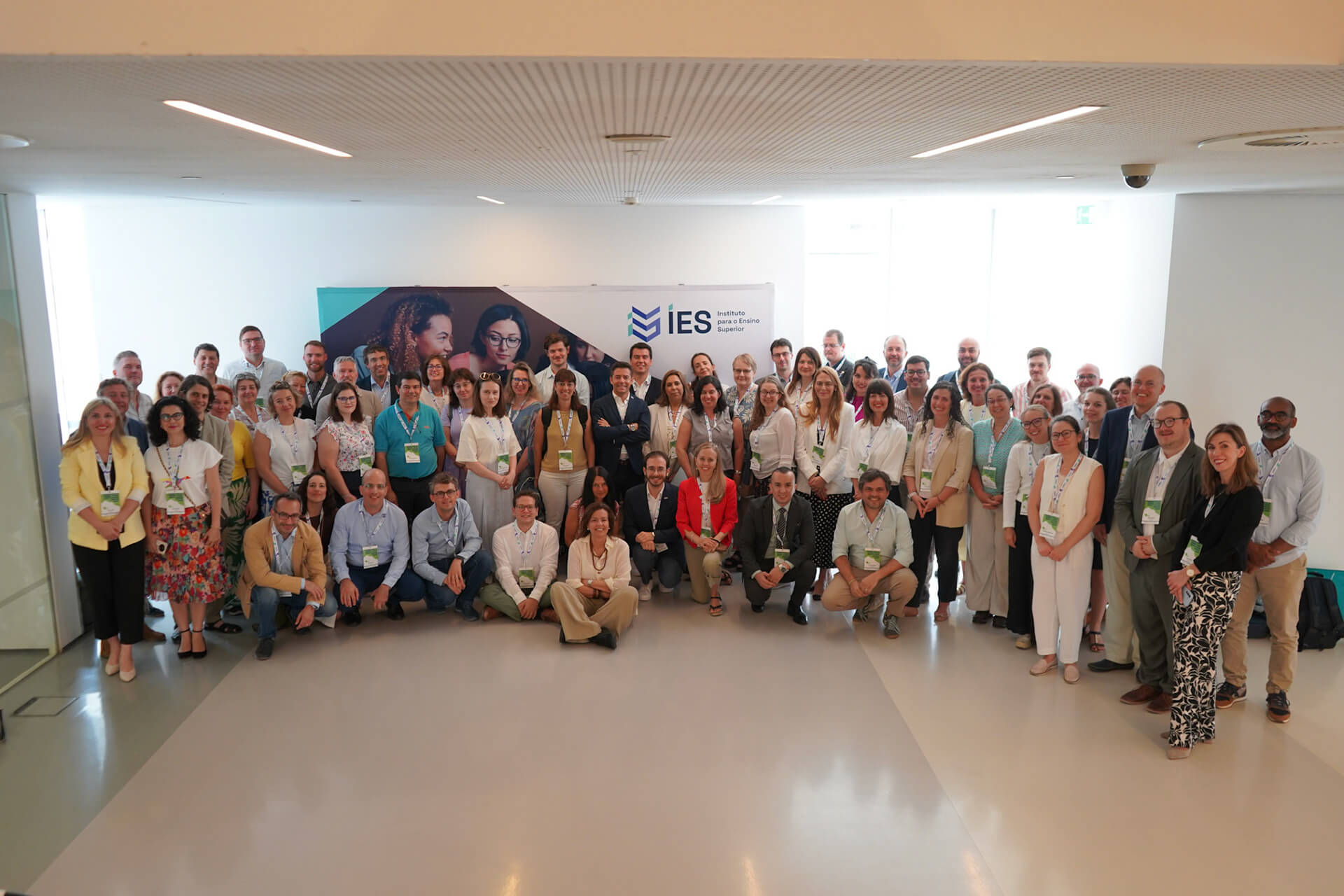
The Institute for Higher Education, IP and the Academic Cooperation Association (ACA) organised a two-day conference in Tróia, Portugal, dedicated to exploring the multi-level socioeconomic impact of Erasmus+ mobility. The conference brought together more than 70 participants from National Agencies, higher education institutions, university networks and student unions.
The event was opened by Cristina Perdigão, Vice-President of the Institute for Higher Education, Portugal, who stressed the strategic importance of Erasmus+ for Europe’s competitiveness and highlighted the role of higher education in socioeconomic development.
The conference built on a growing body of academic research and professional studies on the impact of international credit and degree-seeking mobility at individual, institutional and wider system level. These included studies conducted by ACA, ACA members and partner organisations, such as ESN:
Drawing on the latest evidence, data sources and methodological approaches, Giorgio Di Pietro, Associate Professor at Loyola University, Spain, underlined the importance of carefully interpreting the findings of existing studies, while pointing to the need for further research. Veronika Kupriyanova, Deputy Director of ACA, highlighted the accompanying macroeconomic gains of Erasmus+ mobility, which complement the programme’s qualitative impact on individuals and organisations.
The event also featured a stakeholder panel discussion on the different ways in which impact can be understood, measured and supported. Moderated by Irina Ferencz, ACA Director, the discussion reflected on evolving policy expectations, including the growing emphasis on expected impact and the conditions that enable it. These issues were considered from the perspectives of students, higher education institutions and national funding agencies, with contributions from Wim Gabriels, Director of ESN; John Edwards, Secretary-General of EURASHE; Marina Steinmann, Senior Expert at DAAD; and Olivier Marichalar, responsible for studies, press and communications at Campus France.
Two parallel sessions, moderated by Antonija Gladović, Director of the Agency for Mobility and EU Programmes in Croatia, and Simone Lepore, President of Erasmus Student Network, featured institutional practices from Hungary, the Netherlands, Norway, Portugal and Spain. Contributions were provided by Norbert Sipos, Associate Professor and Deputy Director of the International Centre at the University of Pécs; René Teunissen, Head of Internationalisation and Senior Policy Advisor Internationalisation at Erasmus University Rotterdam; Einar Seime Stokka, Senior Advisor at Western Norway University of Applied Sciences; Rui Branco Lopes, Head of the International Relations Office at Coimbra Health School, Polytechnic of Coimbra; Bárbara Coelho Gabriel, Vice-Dean of the Faculty of Mechanical Engineering at the University of Aveiro; and Enara Iriondo, International Projects Coordinator at the IKASLAN mobility consortium.
The sessions explored how international student mobility can be connected more strategically to local research, innovation and labour market ecosystems, while also addressing challenges linked to connecting international mobility to the local context. Speakers highlighted university partnerships with local actors, including research centres, industry, social partners, and regional authorities. They also examined how both credit and degree-seeking mobility can contribute to institutional efforts to develop talent, strengthen graduate employability and build stronger links with employers, regions and sectoral ecosystems.
In their joint key takeaways, Antonija Gladović and Simone Lepore highlighted, among other points, the potential of leveraging mobility for regional and national socioeconomic development. They also underlined the importance of raising awareness of the impact of international student mobility among different stakeholders, while strengthening the capacity of institutions and staff to build the connections needed to maximise this impact.